Human Evolution TheoryCHRISTOPHER GOMES · A RESEARCH FRAMEWORKRead the manuscript
Chapters & navigation

MAPS, CHRONOLOGY & MECHANISMS

The illustrated guide

Follow the geography and chronology, then examine the pressures and proposed responses.

Each figure can be opened at full size. Maps use modern geography for orientation; movement arrows and evolutionary mechanisms express the paper’s proposed model.

Early hominin chronology
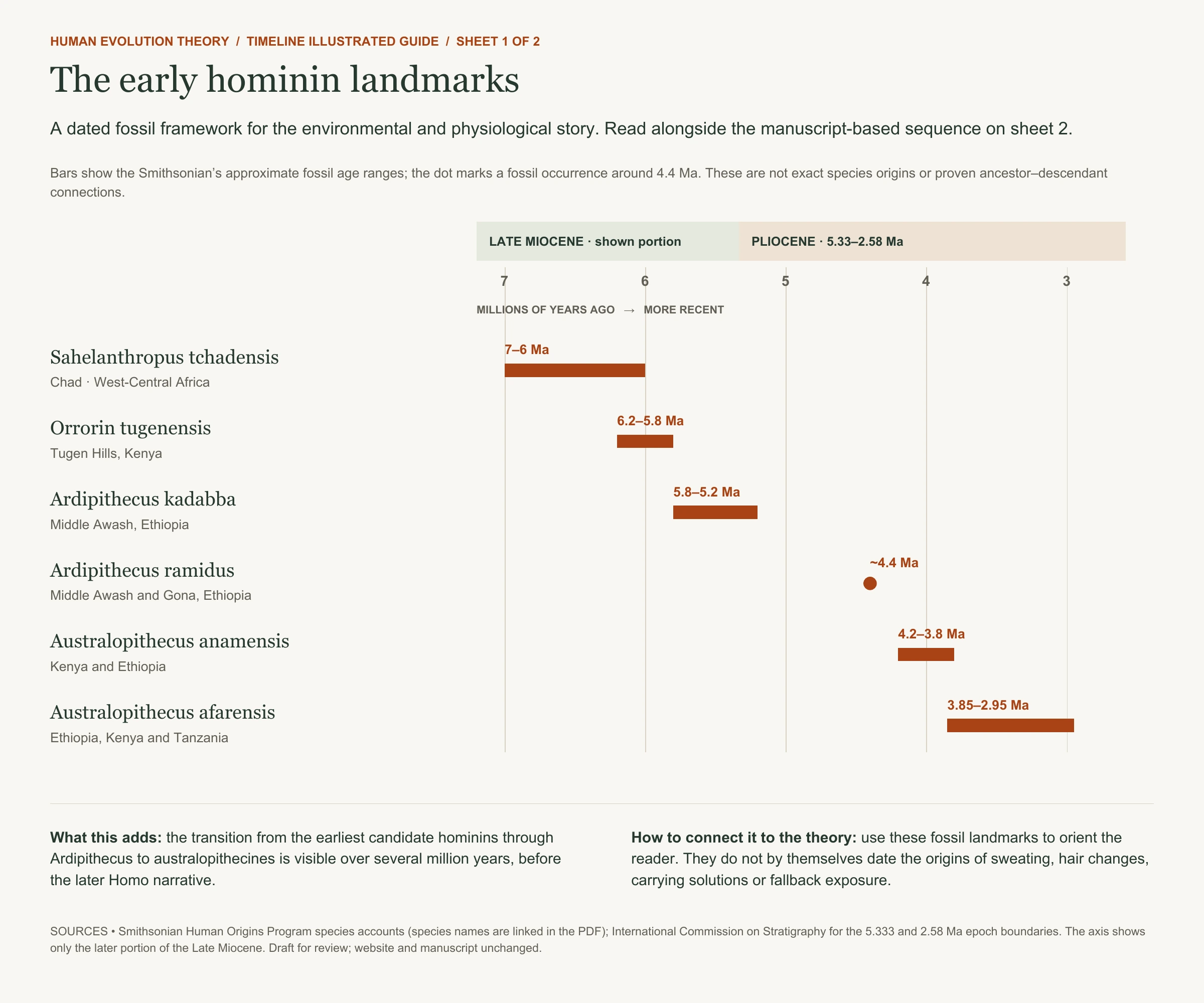
Early hominin chronology. Dated fossil ranges place Sahelanthropus, Orrorin, Ardipithecus and australopithecines in chronological context.
Dated fossil ranges place Sahelanthropus, Orrorin, Ardipithecus and australopithecines in chronological context. Open full-size figure

Read the accompanying chapter →

The broader evolutionary journey

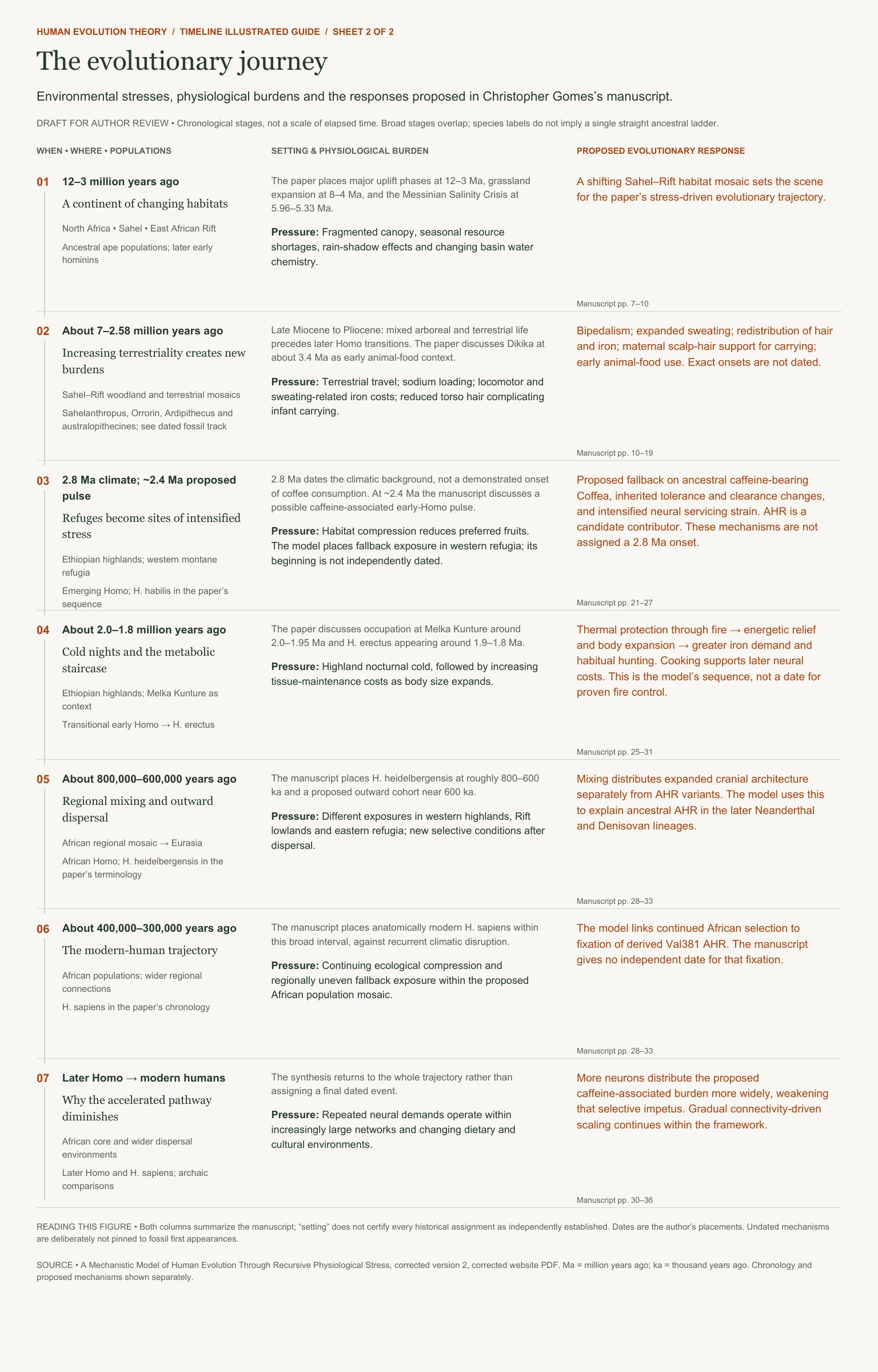
The broader evolutionary journey. Chronological stages connect environmental pressures, physiological burdens and proposed responses.
Chronological stages connect environmental pressures, physiological burdens and proposed responses. Open full-size figure

Read the accompanying chapter →

The geographic setting

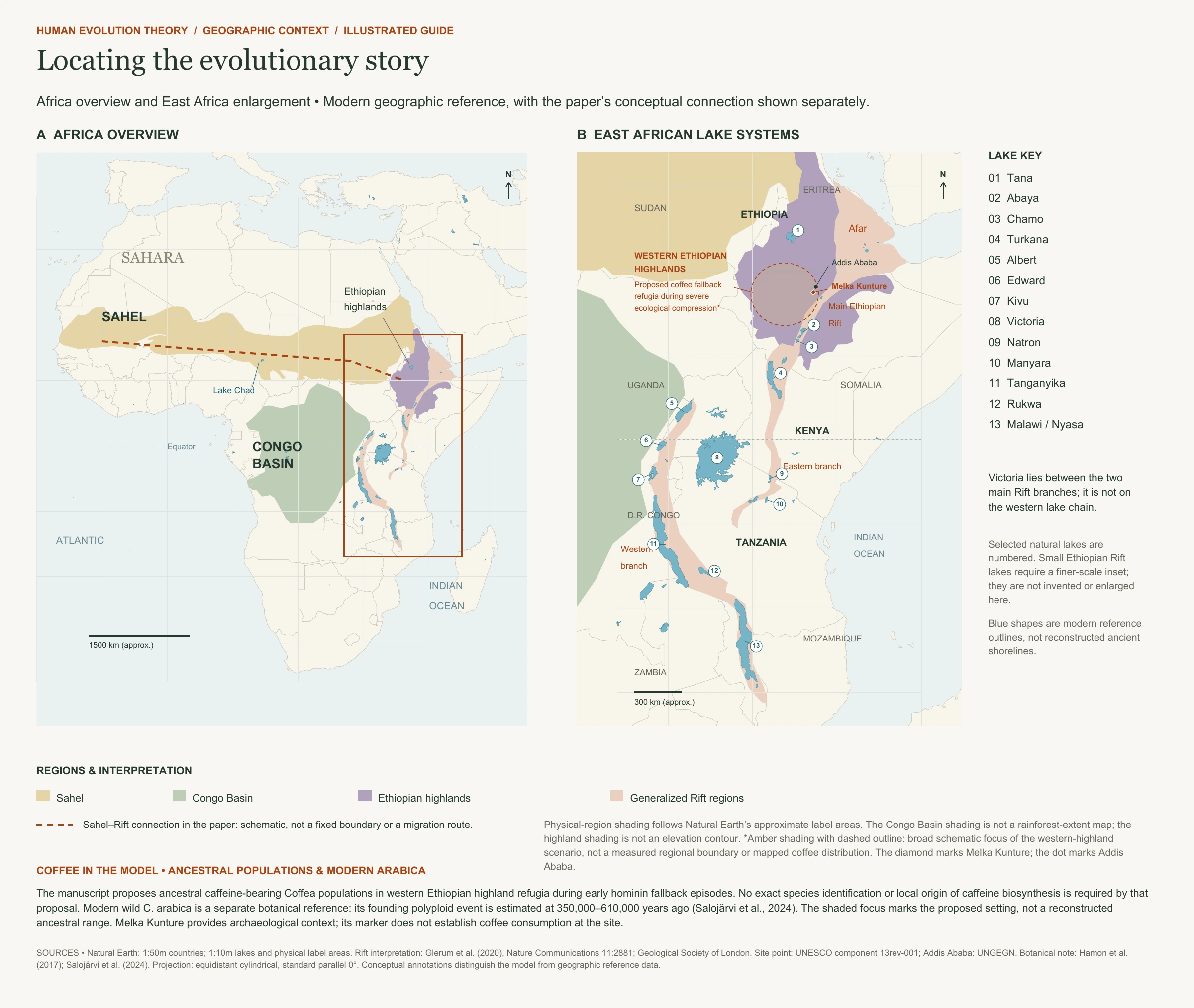
The geographic setting. Africa and East Africa, with western Ethiopian highland focus, Melka Kunture and modern lake reference outlines.
Africa and East Africa, with western Ethiopian highland focus, Melka Kunture and modern lake reference outlines. Open full-size figure

Read the accompanying chapter →

Compression, expansion and renewed contact
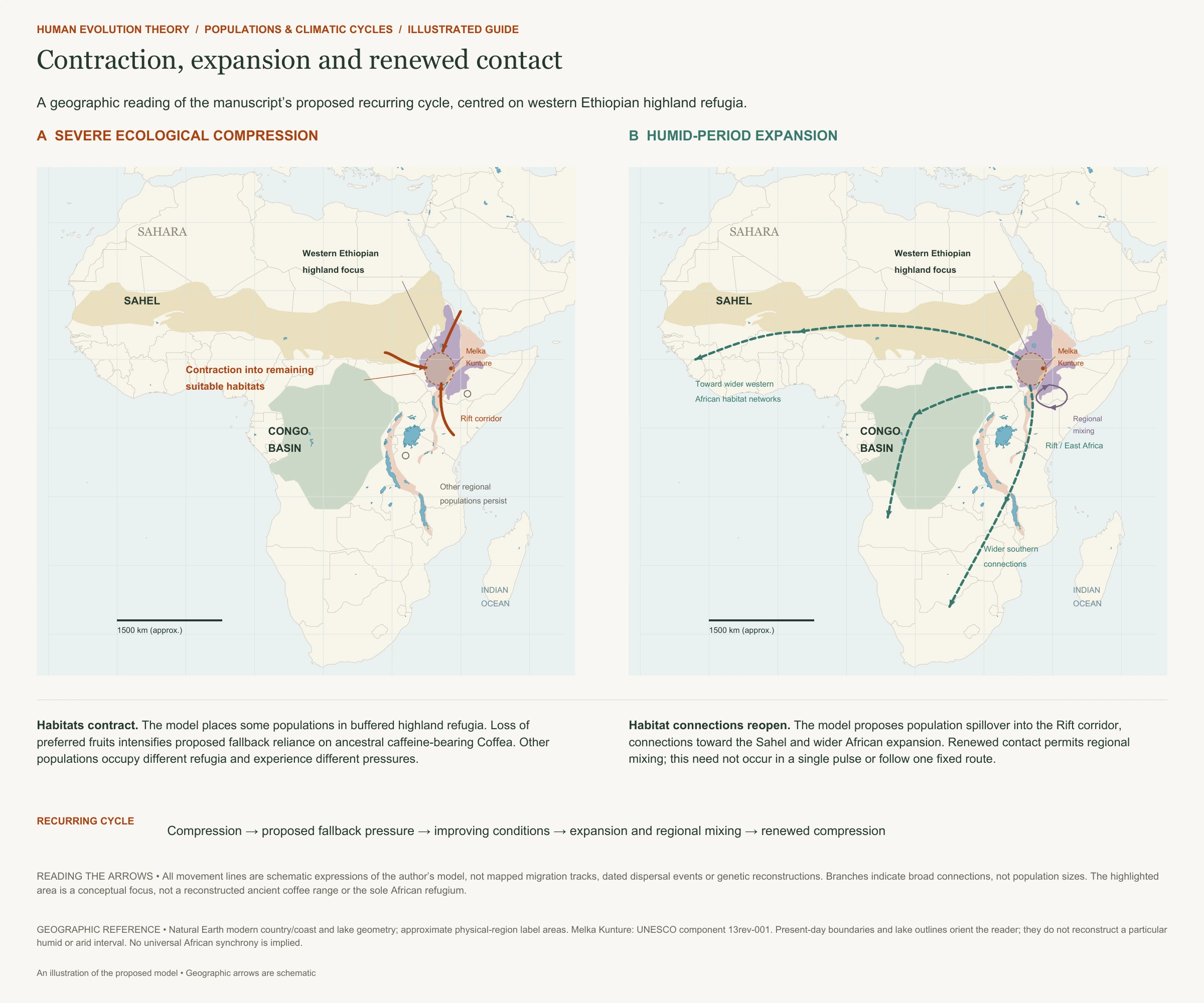
Compression, expansion and renewed contact. Schematic inward and outward arrows express the proposed climatic population cycle, including Rift and Sahel connections.
Schematic inward and outward arrows express the proposed climatic population cycle, including Rift and Sahel connections. Open full-size figure

Read the accompanying chapter →

When a refuge becomes a source of stress
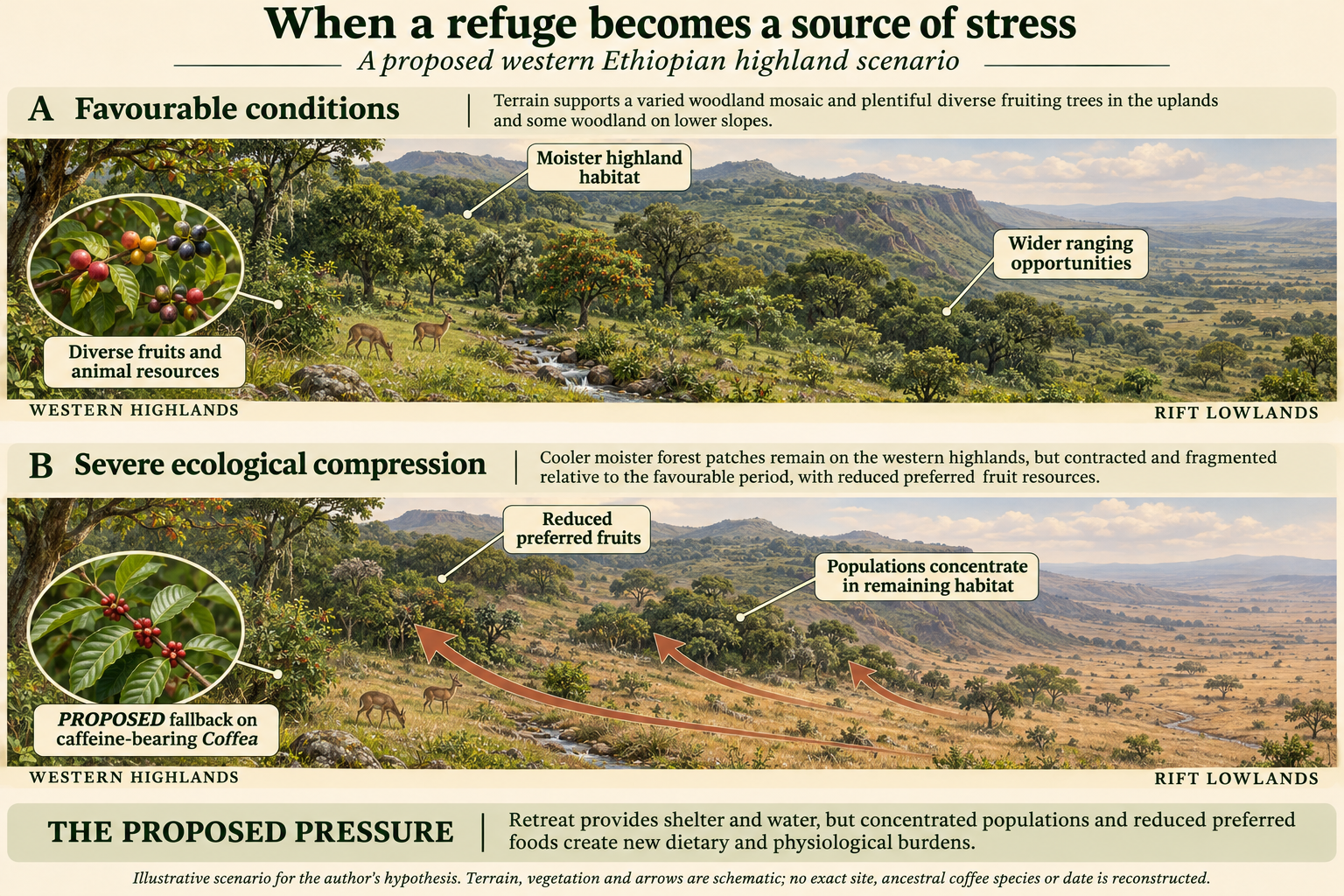
When a refuge becomes a source of stress. An imagined paired highland landscape contrasts favourable conditions with the proposed fallback pressures of ecological compression.
An imagined paired highland landscape contrasts favourable conditions with the proposed fallback pressures of ecological compression. Open full-size figure

Read the accompanying chapter →

Two neural-scaling pathways

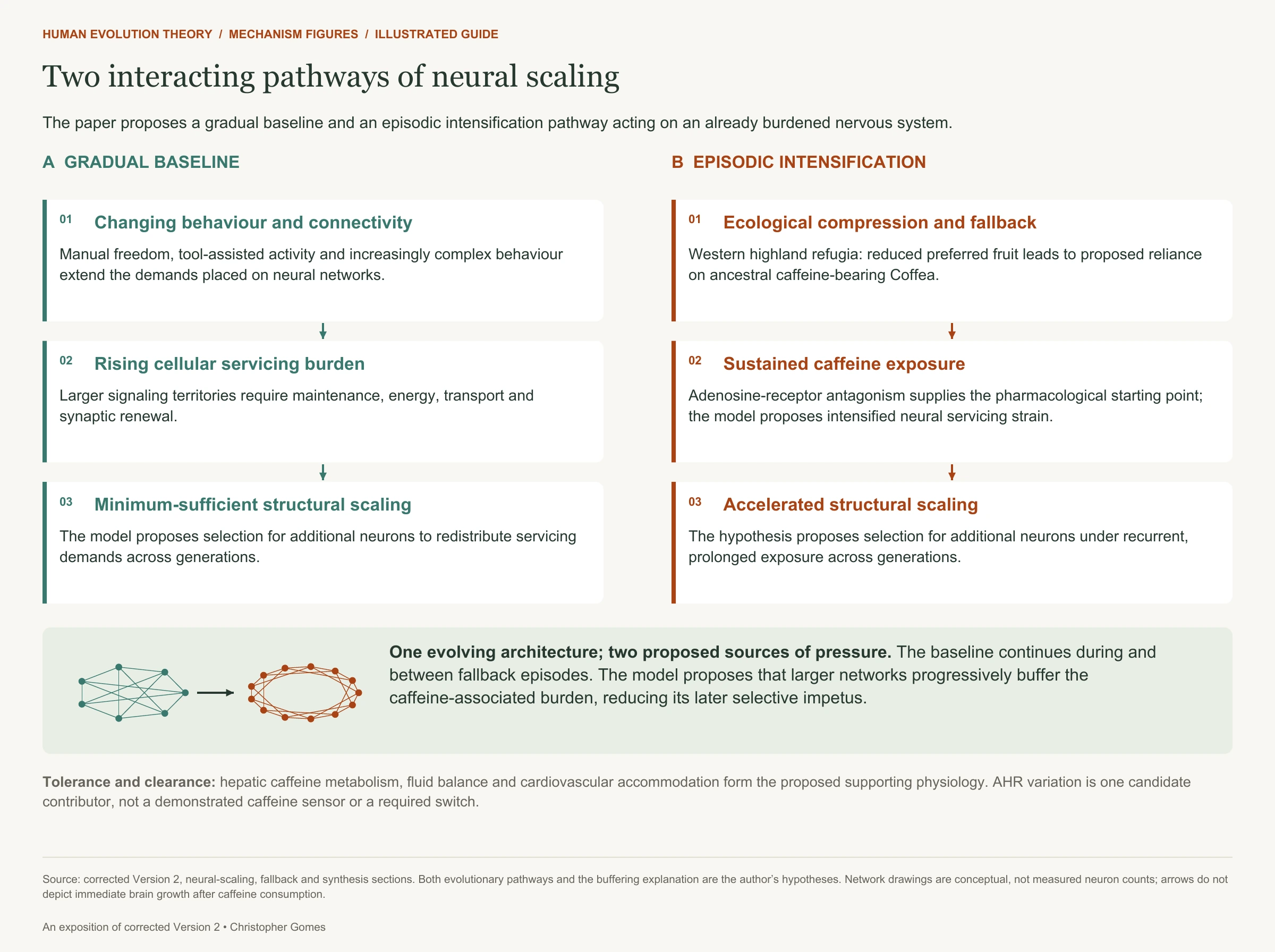
Two neural-scaling pathways. The proposed gradual baseline and caffeine-associated intensification operate on the same evolving architecture.
The proposed gradual baseline and caffeine-associated intensification operate on the same evolving architecture. Open full-size figure

Read the accompanying chapter →

The proposed metabolic staircase

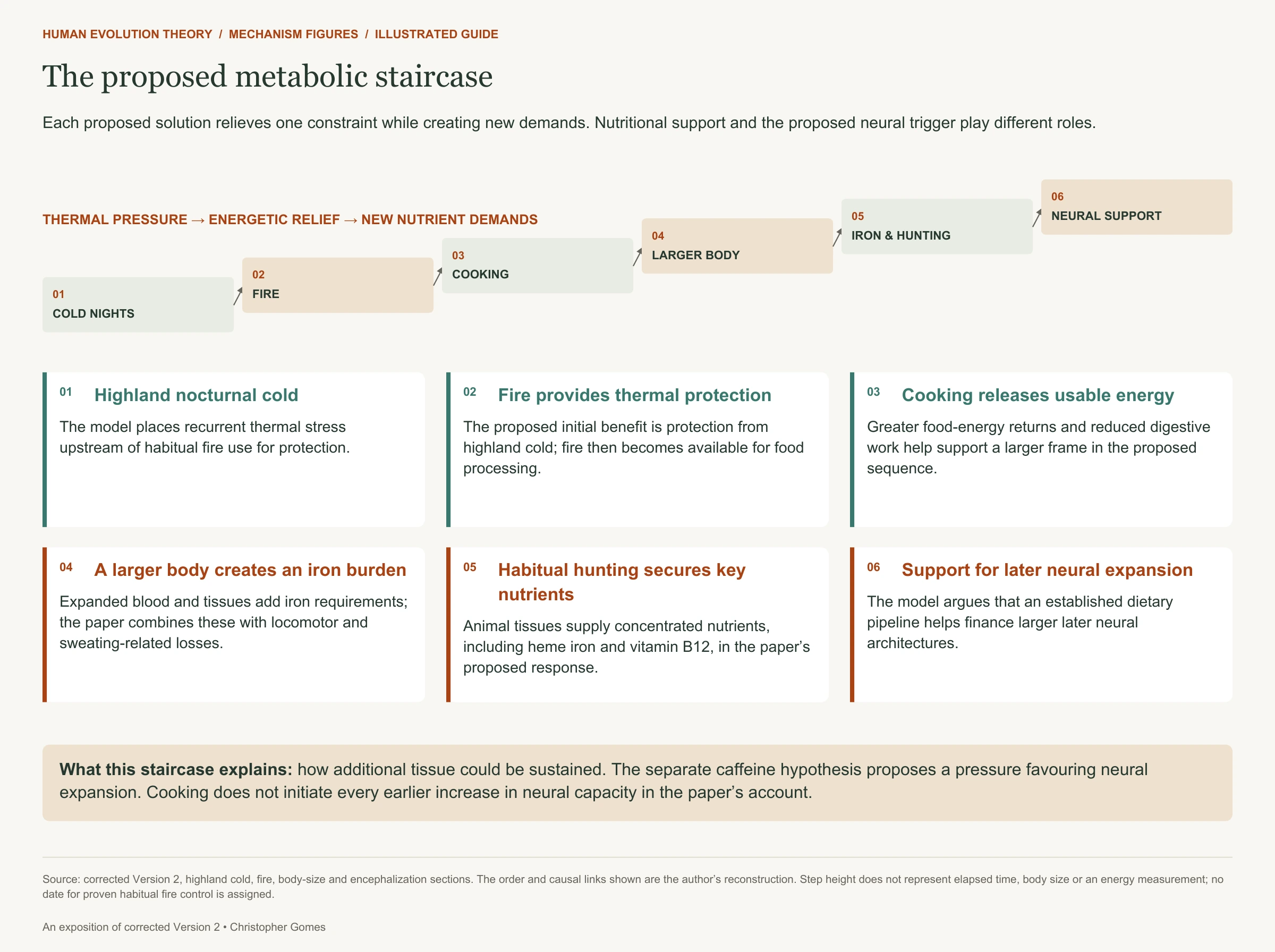
The proposed metabolic staircase. Highland cold, fire, cooking, body expansion and nutrient demands form the paper’s proposed sequence.
Highland cold, fire, cooking, body expansion and nutrient demands form the paper’s proposed sequence. Open full-size figure

Read the accompanying chapter →

Maternal hair and infant transport

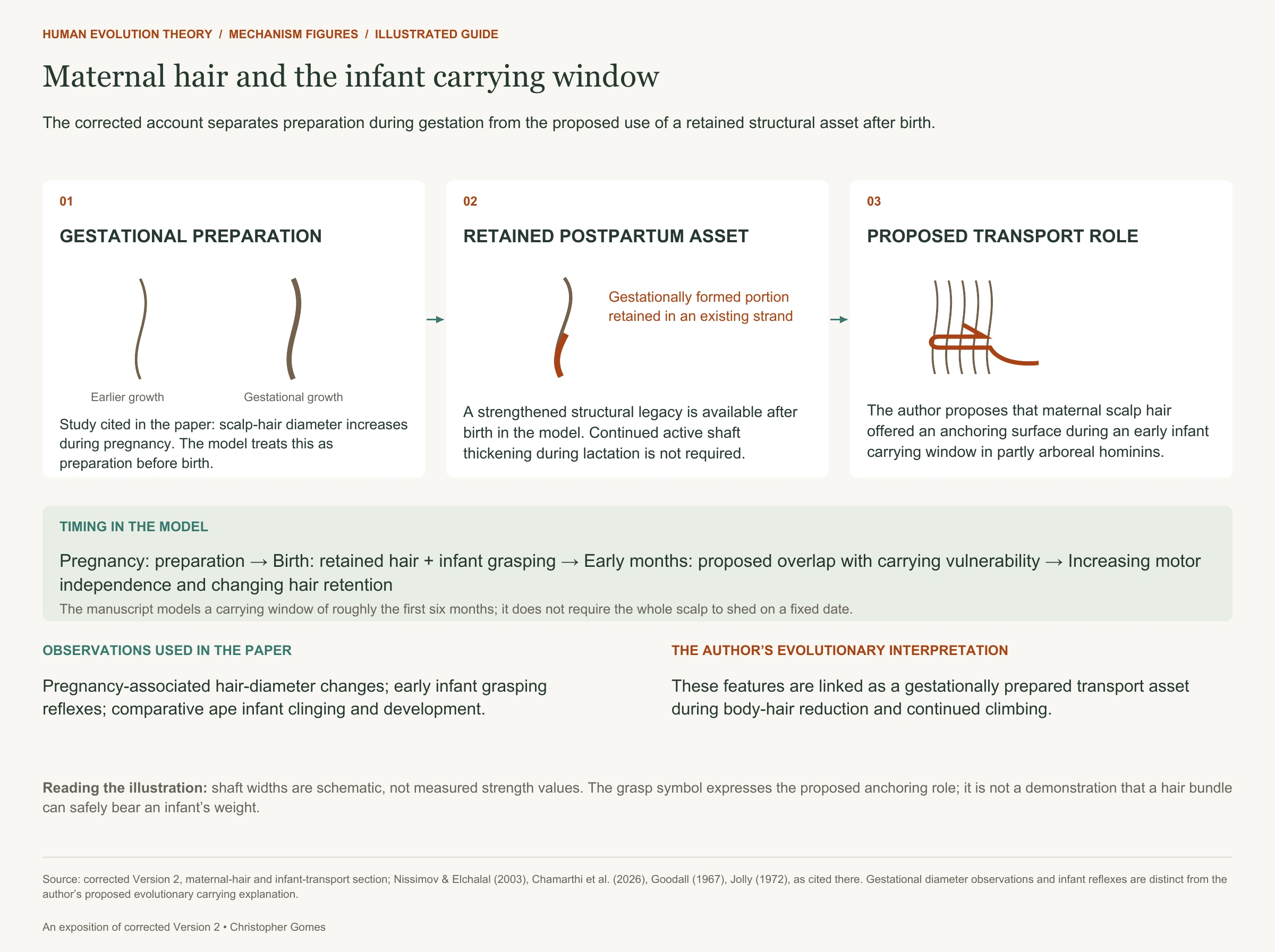
Maternal hair and infant transport. Gestational preparation precedes the proposed postpartum use of retained hair; no continued lactational shaft thickening is required.
Gestational preparation precedes the proposed postpartum use of retained hair; no continued lactational shaft thickening is required. Open full-size figure

Read the accompanying chapter →

Footstrike, iron burden and body hair
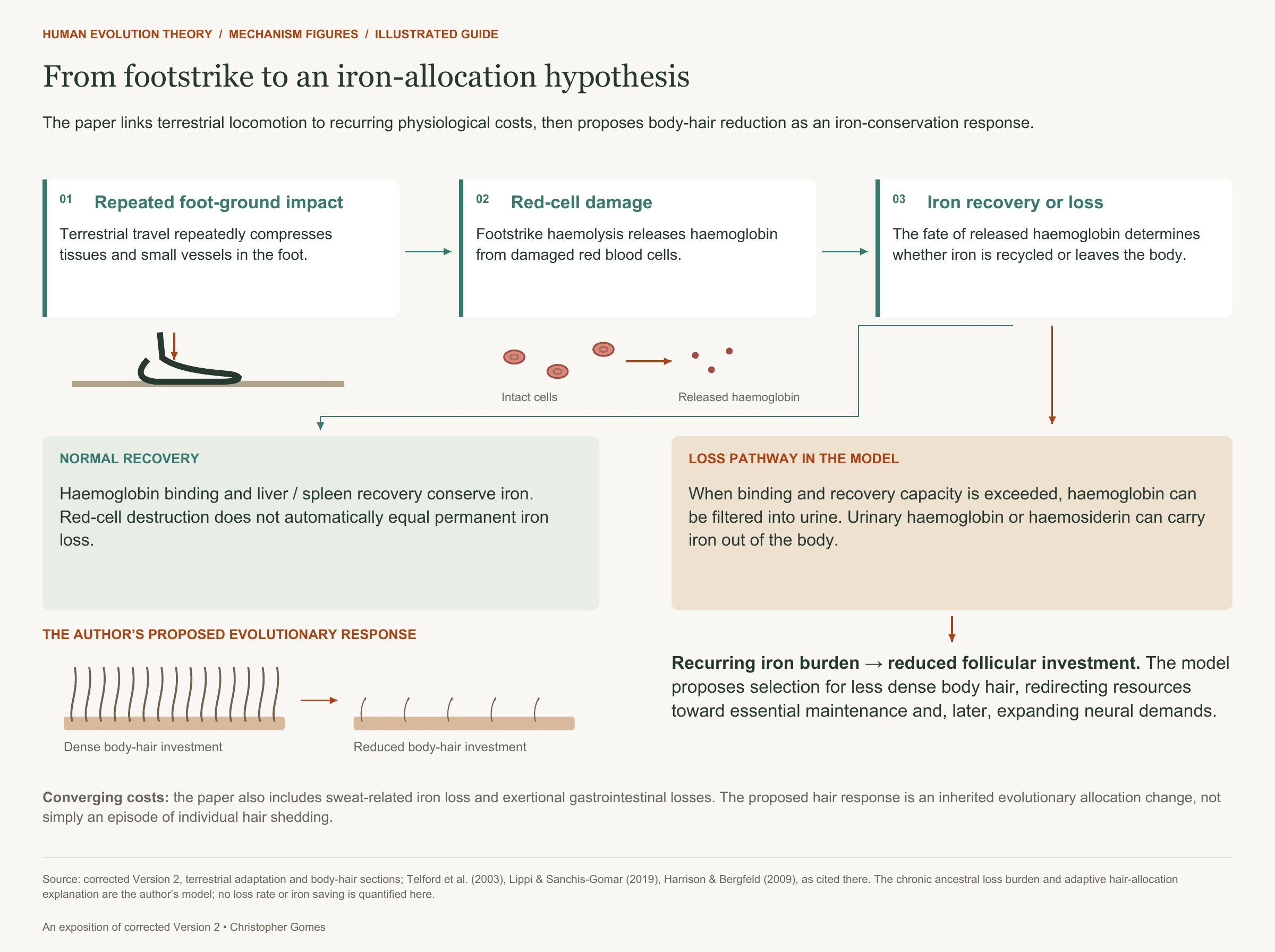
Footstrike, iron burden and body hair. Normal iron recovery is distinguished from urinary losses and the proposed evolutionary allocation response.
Normal iron recovery is distinguished from urinary losses and the proposed evolutionary allocation response. Open full-size figure

Read the accompanying chapter →

Sodium, sweating and the cooling payoff
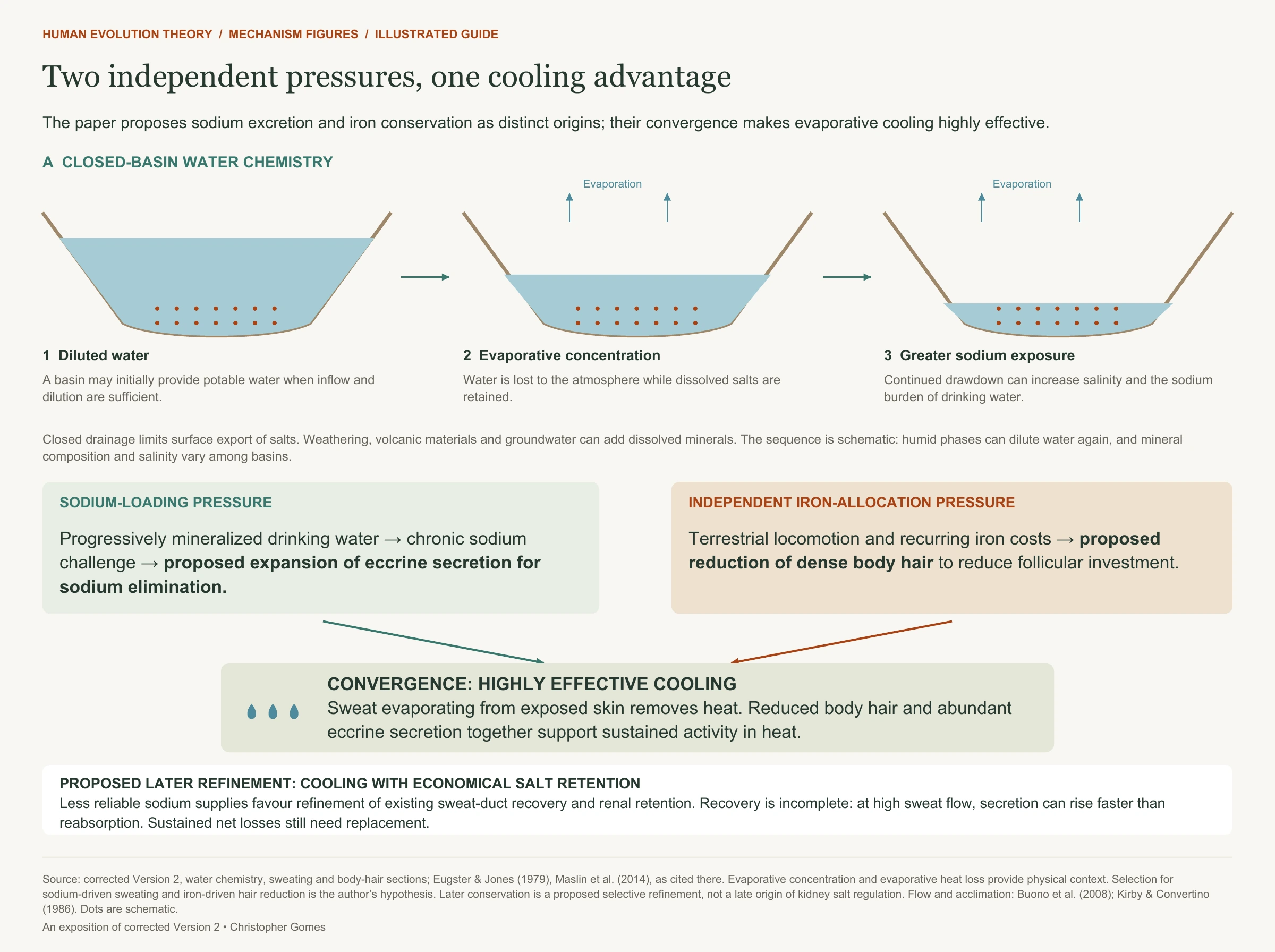
Sodium, sweating and the cooling payoff. The proposed excretory origin and independent hair response converge on cooling, followed by proposed refinement of salt conservation.
The proposed excretory origin and independent hair response converge on cooling, followed by proposed refinement of salt conservation. Open full-size figure

Read the accompanying chapter →

Highland landscape illustration generated with AI.